
Imagine a company wants to demonstrate the importance of collaboration as part of its corporate culture during an event.
It could show an inspiring video. Tell a story about a team overcoming a major challenge together. Or deliver a presentation explaining why teamwork is one of its core values.
All perfectly valid approaches.
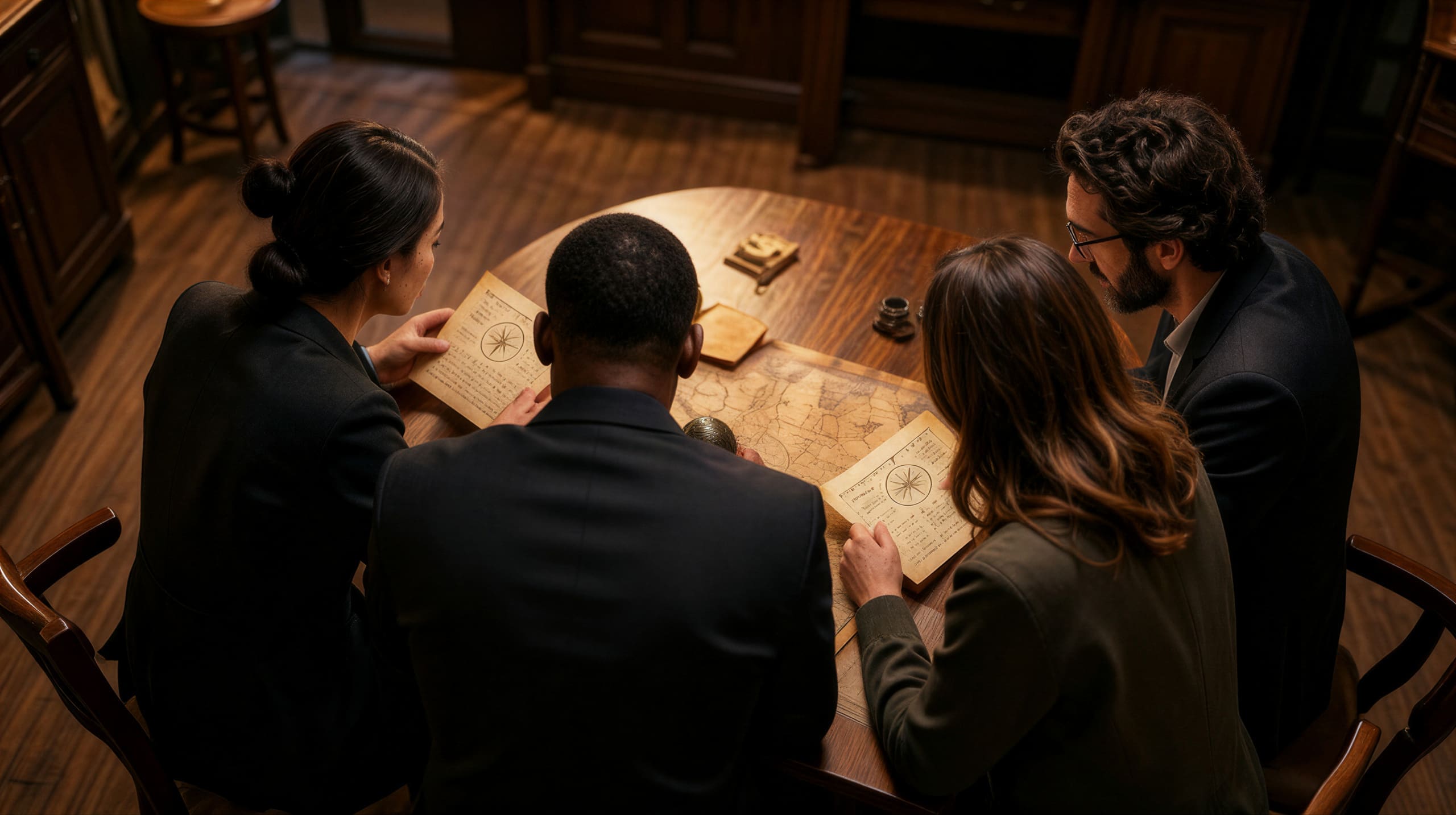
But what if the participants suddenly found themselves facing a challenge that no one could solve alone?
One person discovers a crucial clue. Someone else has information without which that clue makes no sense. And only when they share what they know can they move forward.
Nobody had to explain to them why collaboration matters.
They have just experienced it for themselves.
And for us, this is one of the most fascinating differences between storytelling and game design.
A Great Story Captivates Us. A Great Game Makes Us Part of It.
Stories can move us, surprise us and make us think. We follow the characters, become emotionally invested in their journeys and want to know what happens next.
A game adds another dimension.
Suddenly, we’re no longer just observers.
We have to take action ourselves.
We search, connect the dots, experiment, make decisions and experience the consequences of our actions firsthand.
This also changes how a brand can communicate its message.
Instead of simply telling people what it stands for, a brand can create a situation where those very values become essential to progressing through the game.
The message isn’t just in the story. It’s in what players actually have to do.

Game Mechanics Can Communicate More Than a Slogan
Let’s stay with the example of collaboration.
Imagine two different games.
In the first, the story is about a successful team overcoming a difficult challenge together. The players then solve a series of puzzles – but each person works independently.
In the second game, collaboration isn’t just part of the storyline.
It’s essential to making progress.
Players have different pieces of information, need to communicate and must make decisions together.
Both games could be entertaining.
But which one actually makes people experience the value of collaboration?
This is exactly why designing the right game mechanics is such an important part of brand experience design for us.
The same principle can be applied to many different brand values.
A brand that stands for innovation could encourage players to experiment with unconventional solutions.
For a brand built around precision, noticing the smallest details could be the key to success.
And if exploration is at the heart of a brand, curiosity could become the most important skill needed to complete the mission.
The challenge is not simply to include these qualities as words in a story.
They need to be reflected in the gameplay itself.
Even the Challenges Say Something About the Brand
One aspect is often underestimated:
How does playing the game actually feel?
A challenge can spark curiosity, create a sense of achievement or encourage people to engage in lively discussions.
But it can also frustrate, overwhelm or simply bore them.
That’s why developing an exciting story and then adding a few puzzles isn’t enough.
The level of difficulty, the nature of the challenges, the pace and the opportunities for collaboration all shape the overall experience.
Should the experience encourage people to experiment?
Should they discover something together?
Or should they experience the importance of making precise decisions under time pressure?
Each of these goals calls for a very different approach to game design.
And that’s where the creative challenge lies:
Not simply designing an exciting game, but creating one that evokes the intended experience.

When Everything Comes Together, a True Brand Experience Emerges
A compelling game experience doesn’t come from a great story alone.
Storytelling creates context and sparks curiosity.
Game mechanics determine what people actually do.
Challenges shape how they experience the game.
And thoughtful pacing and narrative structure bring everything together into a coherent whole.
At URBANescape, we therefore develop custom Game Solutions not only around the story we want to tell.
What matters most to us is:
What should people experience for themselves within that story?
Because a brand that stands for collaboration can talk about it.
It can tell a story about it.
Or it can put people in a situation where they suddenly realise:
We can’t do this alone.
And sometimes, that single moment communicates more than even the most carefully crafted brand message.