
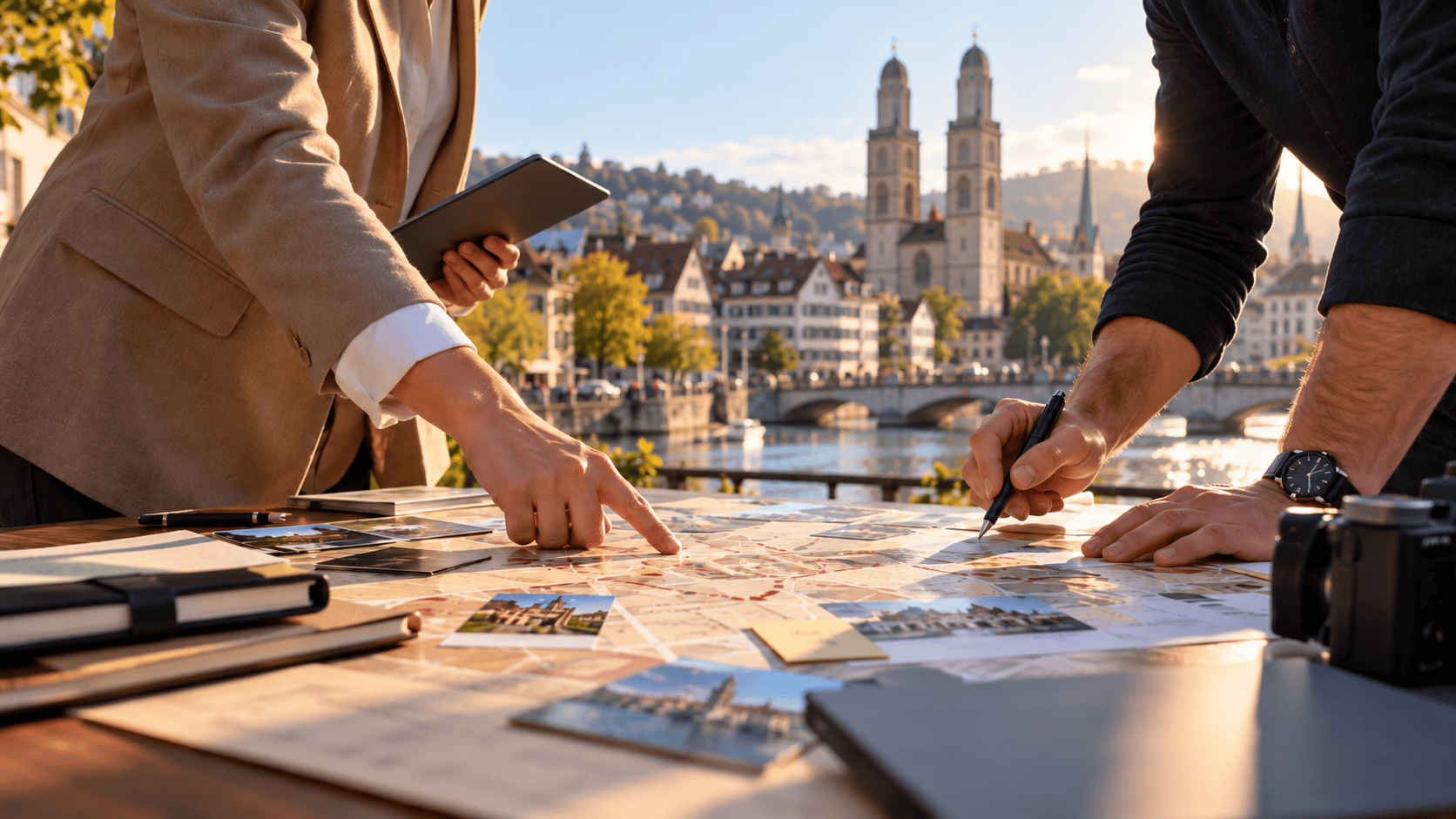
An interactive treasure hunt through a historic town centre. Visitors follow a story, discover hidden details and solve puzzles closely connected to the location. A memorable experience. An additional attraction for the destination.
But what happens when the first game is successful and new ideas begin to emerge?
Perhaps there is another fascinating local legend waiting to be explored. A different target audience to engage. Or a neighbouring town whose history could inspire an adventure of its own.
This raises an interesting question: Do we simply develop the next game, or do we start building a long-term portfolio of interactive experiences?
1. From a Single Attraction to a Growing Portfolio of Experiences
Destinations rarely have just one story to tell. A single game can bring a particular place or theme to life in a unique way. Multiple destination games create opportunities to connect different stories, audiences and locations.
This can also be strategically valuable. Rather than constantly searching for entirely new attractions, destinations can explore new ways of bringing existing places and their stories to life.
They can gradually expand their offerings, create new reasons to visit and encourage guests to return for experiences they have not yet discovered. And there is no need to start with an ambitious master plan.
Sometimes, it takes just one game to reveal how much more a destination has to offer.

2. Creative Diversity Doesn’t Require Technical Complexity
Every great destination game should have its own identity. A historical mission works differently from a murder mystery. A treasure hunt needs a different narrative structure from a game designed to explore nature or cultural heritage.
These differences are intentional. After all, the goal is not to create ten variations of the same game, but ten distinctive experiences. From a technical perspective, however, there is no need to start from scratch every time.
When multiple games run on the same Game Platform they can share a common technical foundation while their stories, challenges and game mechanics are individually designed. For visitors, this means a familiar and consistent user experience.
For operators, it creates a connected portfolio that can grow without requiring a separate technical solution for every new game.
The diversity comes from game design – not from building more apps.
3. Growth Requires More Than Great Ideas. It Requires Smooth Operations.
One aspect of developing new visitor experiences is easily overlooked:
What happens after launch?
A game needs to be more than engaging. It also needs to be bookable, accessible and manageable in everyday operations. Imagine a destination offering five different games, with new bookings coming in every day.
Does someone need to process each order?
Manually create player access?
Send game instructions to every customer individually?
If so, every additional game also increases the administrative workload.
That is why operational processes should be considered from the very beginning. Automated game access can make a significant difference here.
Guests can obtain their game and automatically receive their individual access details and the information they need to start. They can begin independently, without someone having to process every game start manually.
Especially when an offering is designed to grow, this is much more than a convenient technical feature. It makes it possible to introduce additional experiences without increasing administrative work at the same rate.

How We Approach This at URBANescape
At URBANescape, we develop custom games and operate our own Game Platform, consisting of an app and backend. New digital or hybrid games can be developed and added to this existing platform.
The technical environment and user experience remain consistent while new stories, challenges and mechanics can be added. Organisations that want to put their own brand at the centre of the experience can also use the platform as a white-label solution with their own name, branding and games.
Those who prefer to start with a single custom game can use the existing URBANescape platform as the technical foundation. This allows the offering to grow step by step, without having to define every future possibility from the outset.
The First Game Doesn’t Have to Be the Last
Not every destination needs five or ten games. Sometimes, one carefully designed experience is exactly the right solution. But for those thinking long term, there is one question worth asking from the very beginning:
What if this story is only the beginning?
Because most destinations have many more stories waiting to be discovered. And with the right combination of creative game design and a scalable technical foundation, those stories can become entirely new experiences, again and again.